Share this Article


The Glowing Screen in the Living Room
Picture the scene: a cold cup of coffee on the counter, the plastic thud of a tablet hitting hardwood, and a child in full meltdown because thirty minutes of cartoon time just ended. Sound familiar? That heavy wave of parental guilt is something most Christian households know well. Technology can feel like it’s quietly pulling kids away from family values, turning home into a battleground where the screen always seems to win.
Tablets and smartphones often get treated with dread. Christian parenting in a digital age tends to feel like a defensive game, where so much focus goes into what to block, what to ban, and what to protect kids from. But maybe the whole strategy needs rethinking.
What if the iPad stopped being the enemy and started being a tool for faith?
Hiding kids from technology forever isn’t realistic. Digital discipleship for kids, on the other hand, absolutely is. Passive consumption can be turned into active spiritual growth. What follows is a practical, guilt-free guide for making screen time meaningful without losing your sanity.
What Does Scripture Say About Pixels?
A funny question keeps coming up among Christian parents: What does the Bible say about screen time? Obviously, the Apostle Paul wasn’t tweeting, and Moses didn’t have a smartphone. But scripture still offers a clear blueprint for media consumption in Philippians 4:8, which calls for minds focused on whatever is true, noble, right, pure, lovely, and admirable.
When evaluating a show, a game, or an app, the question shouldn’t stop at whether it’s harmless. Ask whether it builds your child up. Secular children’s entertainment has grown increasingly fast-paced and chaotic, which overstimulates developing brains and leads to those brutal post-screen tantrums. A landmark study by the American Academy of Pediatrics found that high-quality, educational media can positively impact learning, but the key factor is parental co-viewing. Faith-based screen time for kids works best when parents are present, not just permissive.
Moving From Isolation to Interaction
The real danger of technology isn’t the glass screen itself. It’s the isolation. When a child zones out with headphones on for two hours, family connection disappears completely. A few intentional shifts can change that dynamic.
Ditch the headphones. Make it a house rule that media gets shared in common spaces. Sit on the couch together when streaming a Bible-based show like The Chosen or animated scripture stories.
Skip the silent credits. Stories work best as bridges into real conversation. After a cartoon about David and King Saul, bring it up at dinner with something specific: “How do you think David stayed so calm when Saul was being mean to him?”
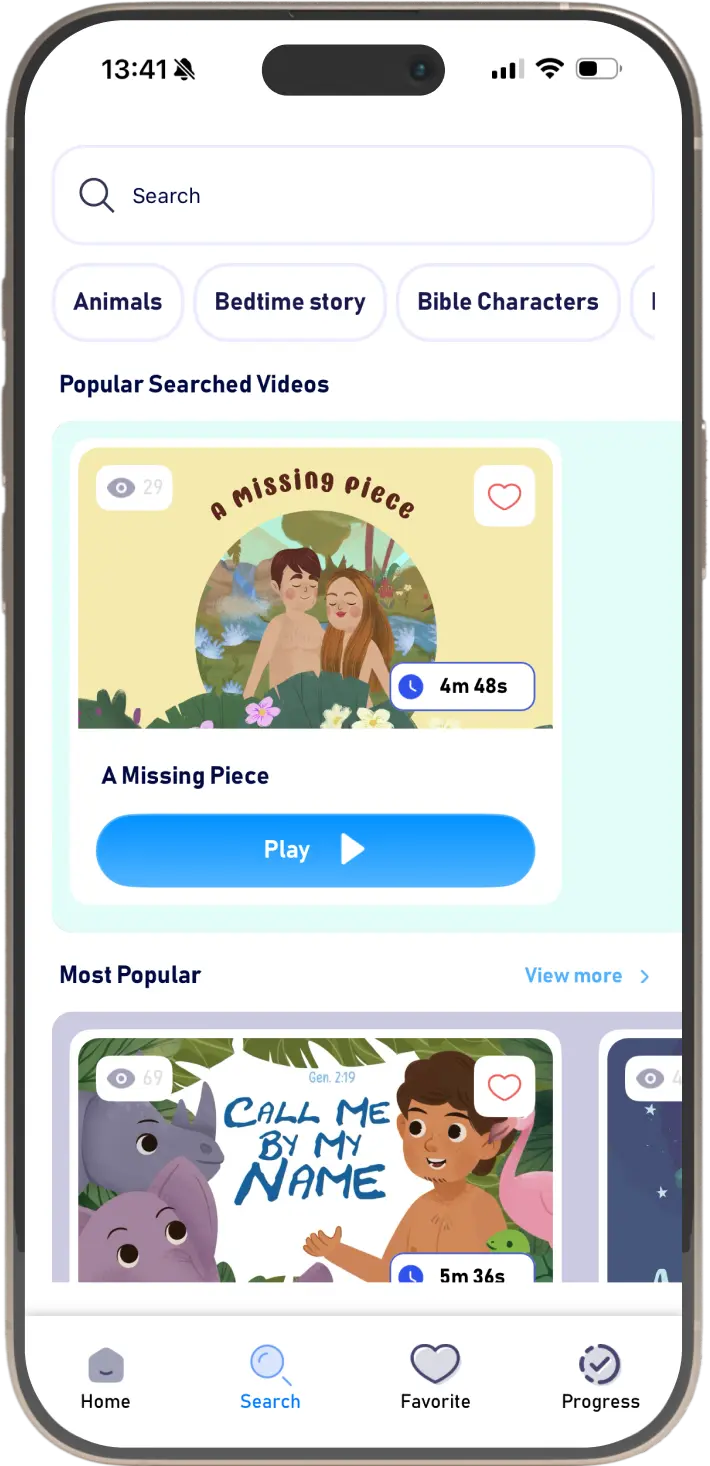
Pick better platforms. Mindless video loops can be swapped for the best Bible apps for kids. The Abba Kid app lets children interact directly with scripture through touch-screen animations and simple quizzes, turning screen time into active learning instead of a passive trance.
Designing a Healthy Tech Diet
Like physical food, a healthy digital diet needs balance. For Christian parents looking for practical screen time tips, the “Swap and Stop” approach tends to work well.
First, take an honest look at the current media lineup. Swap out secular shows that promote sassy behavior or consumerism for high-quality Christian content. Platforms like Minno, Abba Kid, and Yippee offer faith-affirming videos that explicitly teach biblical principles.
Second, set firm boundaries that protect family spiritual life. The easiest one to put in place is a hard cutoff at least an hour before bedtime. Research published in the Journal of Child Psychology and Psychiatry shows that blue light exposure right before sleep disrupts melatonin production, which directly causes behavioral issues the next day. Swap that evening tablet for a physical storybook or family prayer.
The Power of the Clean Break
Even with the best Christian content, kids’ brains still need regular breaks from digital stimulation. Irritability, argumentativeness, or trouble playing creatively are signs that a digital reset is overdue.
Establishing a routine digital fast helps enormously. Screen-free Sabbath ideas for families tend to work well on Saturday or Sunday afternoons. Lock the tablets in a drawer. Turn off the television.
Fill that time with tangible, messy, real-world experiences instead. Build a massive fort in the living room. Go on a long nature walk and look for things God created. Bake bread together and talk about Jesus being the bread of life. Stepping away from the digital world intentionally teaches kids that ultimate satisfaction comes from God and community, not from a glowing glass box.
The goal isn’t to raise tech-phobic children who get shocked by the modern world. The goal is to raise spiritually mature kids who know how to use technology to honor God without letting it control their hearts. Start small today. Change one app. Ask one question. See how God uses that tiny digital window to plant eternal seeds.