Share this Article


Parenting in the digital age can feel like a non-stop tug-of-war between school tablets, video games, and smartphones; screens have quietly taken over our family routines. As Christian parents, though, this debate isn’t just about eye strain or dodging the inevitable screen-time meltdown. It really comes down to stewardship, how we help our kids guard their hearts and minds in a world that’s constantly begging for their attention.
So, how much is actually too much? Here at Abba Kids, we think a faith-filled approach looks way beyond the timer on your phone. It’s less about obsessing over every single minute and more about checking in on our kids’ spiritual and emotional health. Are screens crowding out family dinners, outdoor play, or quiet moments with God? Finding that sweet spot isn’t about parenting out of fear or throwing out all the tech; it’s about using a little practical wisdom to teach our kids self-control, grace, and real-world connection.
What Does the Bible Say About Technology and Screen Time?
Scripture never mentions a tablet, obviously. But it says plenty about what fills a mind and what a person serves. Paul tells the Philippians to think about what’s true, noble, and admirable — not because screens are evil, but because attention is a kind of worship, and worship goes somewhere whether we choose the direction or not.
Biblical boundaries for technology aren’t about banning a device. They’re about asking what’s forming a kid while nobody’s watching. A screen isn’t a moral failure. It’s a tool that can shape a heart the same way a good book or a hard conversation can — the question is which one is actually doing the shaping in your house right now.
When Does Screen Time Become Too Much for a Child?
The American Academy of Pediatrics recommends avoiding screens for kids under 18 months, except for video chats with family; limiting screen time to 1 hour a day of high-quality content for ages 2 to 5; and setting consistent limits for older kids that don’t crowd out sleep, activity, and real conversation. Those are the numbers. Most parents already know them and ignore them anyway, because a quiet kid at 6 p.m. is worth more in that exact moment than a philosophy.
Effects of too much screen time on children show up quieter than people expect — not a dramatic meltdown, but a kid who can’t sit through a two-minute story without asking what’s next, or who gets genuinely irritated by boredom instead of using it. That irritation is the tell. A bored kid who can entertain himself is doing something a screen never taught him.
How Can Christian Parents Create Healthy Digital Boundaries?
Christian parenting advice in the digital age tends to stay vague — “everything in moderation.” That’s true and useless at the same time. Try this instead: pick one meal a day, put every phone in a basket on the counter before anyone sits down, including yours. Not as a rule for the kids. As a rule for the table.
Screen time limits for kids by age work better tied to a landmark than a stopwatch. For a six-year-old: no screens until shoes are on and the backpack is packed. For a ten-year-old: screens end when the porch light comes on, same as playing outside used to work a generation ago. A landmark a kid can see coming beats an argument over a clock every time.
Replacing Screen Time with Activities That Help Children Grow in Faith
Healthy screen time habits for children usually mean having something better already sitting in the room, not just taking something away and hoping. AbbaKid’s story “The Quiet Hour” was built around exactly this — a kid who can’t stand silence at first, then finds he likes what happens in it once he sits still long enough. My daughter asked to hear it again the same night I caught her bored and restless after dinner.
Screen-free family time doesn’t need a grand plan. A deck of cards. A walk around the block praying out loud for whoever you pass. Reading one Psalm together before bed instead of one more video. Small, repeatable, boring in the good way.
Raising Children Who Use Technology Wisely Instead of Being Controlled by It
Raising kids in the digital age isn’t about winning the screen fight once. It’s a hundred small decisions a week, and some weeks I lose most of them. Some nights I hand over the tablet because I’m exhausted and it’s easier, and I don’t have a clean answer for those nights either. Grace has to cover the parent making these calls, not just the kid holding the device.
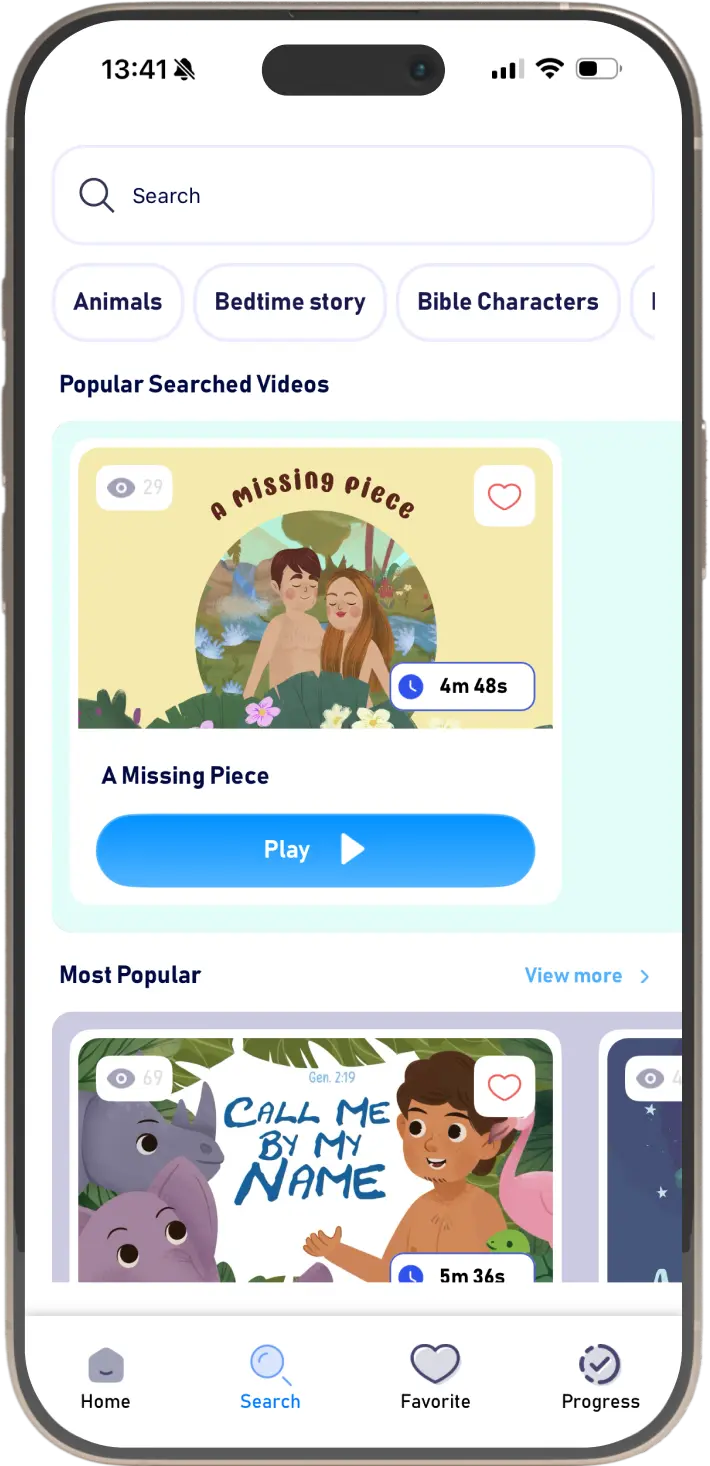
AbbaKid’s books walk through this same idea for bedtime — what we let into our hearts and minds shapes what comes back out of us. If Saturday mornings in your house look anything like mine did, it might be worth keeping close by. Visit the Abba Kid app now and discover the stories your child will definitely love. Available both on IOS and Android.