Share this Article


A four-year-old closes a picture Bible and asks, “Was Noah scared?” Five minutes later, watching a two-minute animated version of the same story, she asks, “Why is the sky so dark?”
Same story. Two questions. Both good ones. Neither would have come up without the format that prompted it.
That’s most of what the animated-vs-book question turns out to be about. It isn’t really which one is better. It’s which one gets your kid to ask something — because a question is where faith learning actually starts.
Animated Bible Stories: Why Visual Learning Engages Kids
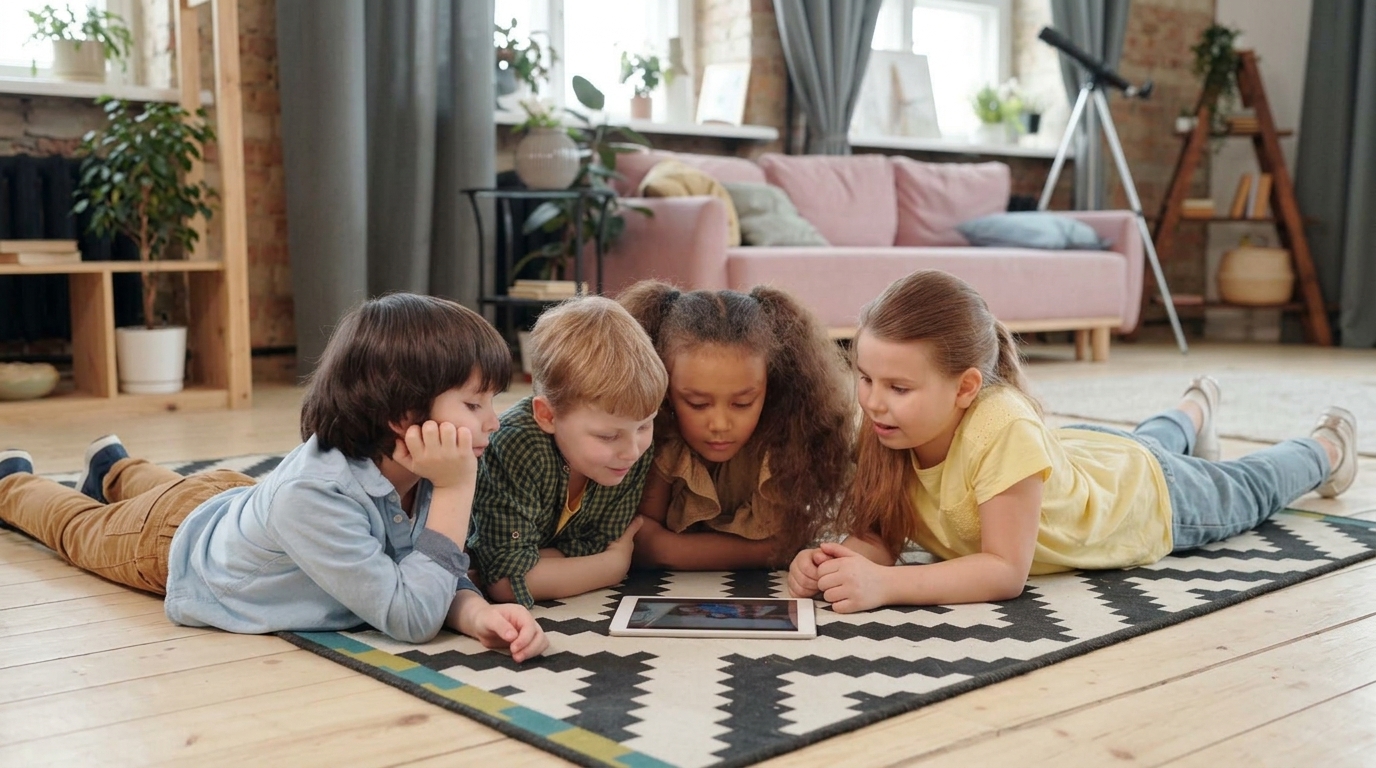
Young children process the world visually first, then through language. The American Academy of Pediatrics is careful about screen time recommendations — under 18 months, avoid screens except video-calling; from 2 to 5, cap at about an hour of high-quality programming a day — and inside that cap, they distinguish between passive scrolling and content that’s designed to teach. Not all screen time is equal.
Animated Bible stories for kids sit in that second category when they’re built right. A well-made short video does something a book can’t: it shows the crowd around Jesus, the darkness before dawn on Easter morning, the actual scale of the storm on the water. Kids who can’t yet read words can still read faces, weather, tension in a scene.
There’s a specific test for whether animation is doing its job: does your child talk about it after? Or do they just want the next one?
If they’re rewinding, pointing, telling their sibling about the whale — that’s engagement, not passive watching. If they finish and immediately ask for another, and can’t tell you what the last one was about, the format won that round and the story lost.
Reading a Children’s Bible: Benefits of Imagination and Reflection
Reading a children’s Bible is slower on purpose. That’s the point.
When a parent reads aloud, the child’s questions set the pace. A page can take thirty seconds or five minutes. A three-year-old will interrupt to ask why the sheep looks sad. A six-year-old will interrupt to ask where the wife came from — the honest questions kids ask when they’re actually paying attention.
Research from Ohio State (2019) shows that children who are read to daily hear about 1.4 million more words by kindergarten than those who aren’t. Bible stories for kids in book form count toward that word count, but the bigger thing is the rhythm. Reading a physical page teaches a child to sit with a story. To wait for the next page. To imagine the color of Joseph’s coat before they see a picture of it.
That imaginative gap — the space between the words and the image in a child’s head — is where a lot of the reflection happens. Animation fills the gap in with someone else’s imagination. A book leaves it open.
Which Format Helps Kids Remember Bible Lessons Better?
This is the question every parent actually wants answered, and the honest answer is: it depends what you mean by “remember.”
Kids remember facts better from repeated exposure — either format works, as long as it’s repeated. Kids remember emotional beats better from animation — the fear, the wonder, the moment of rescue. Kids remember values better from conversation — which usually happens more around a book than around a screen, because a book is quieter.
So the honest test isn’t “video vs book learning for kids.” It’s “which format is triggering the conversation in your specific house.”
In some homes, the app plays during the drive to daycare and then the kid brings it up at dinner — “Mom, did you know Jesus fed a lot of people with just some fish?” In others, the picture Bible is the bedtime routine and the questions come at 8 p.m. with pajamas half on. Neither is better in the abstract. What matters is that a Bible story landed somewhere in the day that your child remembered enough to talk about.
If the video plays, disappears, and no one mentions it again, the format isn’t doing what you hoped. Same for the book.
How to Combine Animation and Reading for Stronger Faith Learning
The best way to teach kids the Bible probably isn’t picking one. It’s using each one for what it’s good at.
Here’s what has worked in our house, roughly. Animation for the hook — the story your kid didn’t know they wanted to know. The Abba Kid video of A Golden Fish and a Silver Coin got both of my kids curious about Matthew 17 in a way I couldn’t have set up with words alone. Books for the dwell — bedtime, the picture Bible, the same story you’ve read forty times because it’s the one about the lion’s den and she likes lions.
A rough rhythm that fits most weeks:
- Mornings or car rides: short animated Bible story. Pick one, watch once. Turn it off at the end instead of letting it autoplay the next.
- After dinner or bath: ask one question about it. “What was the scariest part?” “Which person would you have wanted to be?” Not a quiz. A question.
- Bedtime: read from the children’s Bible. Same story if they liked it, different if they’re ready.
That’s it. That’s the combination. It doesn’t have to be perfect — most weeks in our house one of these three gets skipped, usually the middle one, usually because someone’s already crying about socks.
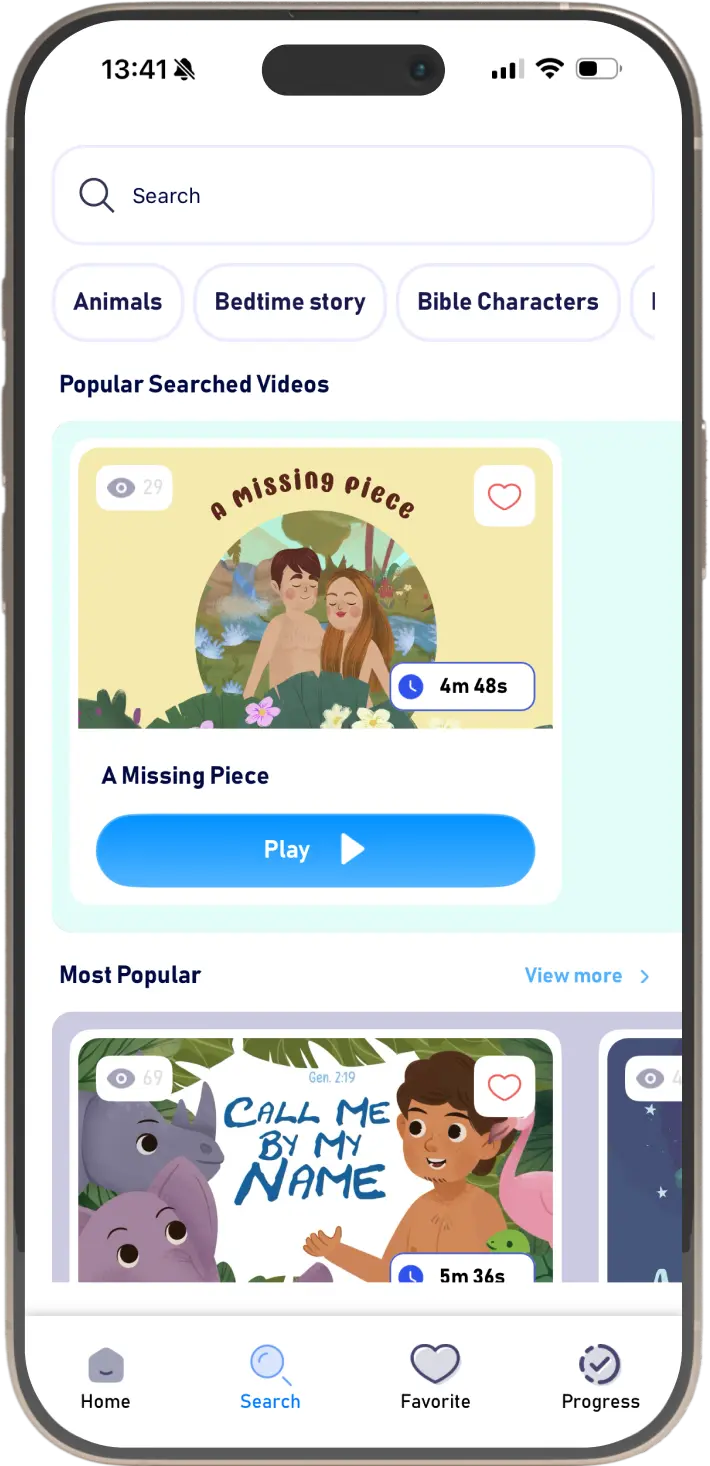
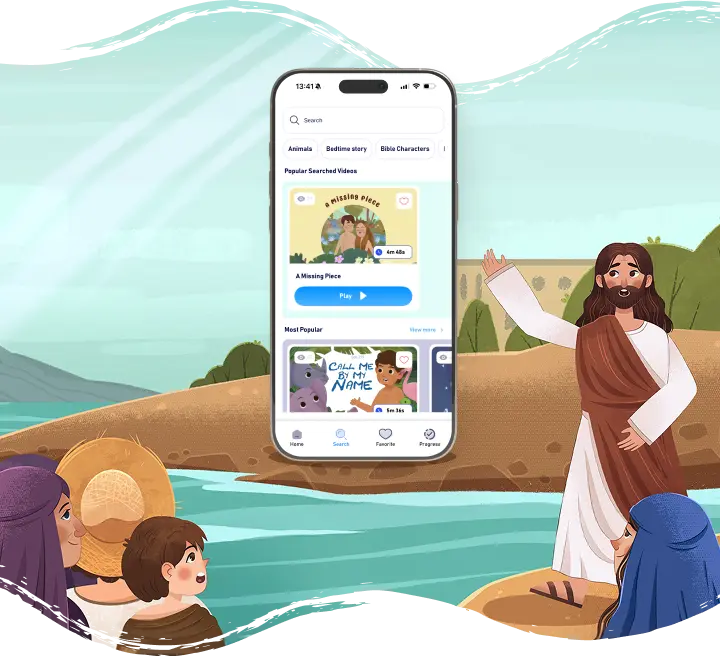
If you want to try the animation side, Abba Kid has short animated Bible stories organized by theme — bedtime, kindness, Bible characters, and so on — so you can match the video to whatever’s happening at home that week. Pair it with whatever children’s Bible is already on your kid’s shelf, and you’ve got the two formats doing the work they each do best.
The goal isn’t more Bible content. It’s a Bible story your child remembered well enough to bring up on their own, tomorrow, at some random moment — the moment when you know it stuck.