Share this Article


A story about letting go of what isn’t good for you — and a book that makes the idea make sense to a child
Sooner or later, every parent has to take something away.
The show that has started giving her nightmares. The game he begs for and then comes off snarling. The friend who is teaching your daughter a version of herself you do not recognize. You take it, and you get the tears, and somewhere in the middle of it you think: I wish she wanted to give this up. I wish it weren’t always me.
That is what makes the ending of Big City Light so unexpectedly useful.
In this story, nobody confiscates anything. A whole city looks at something valuable it owns, decides it does not want it anymore, and gets rid of it voluntarily — and the moment is thrilling rather than sad. For a child, that is a genuinely new idea. Letting go can be something you choose, and it can feel like winning.
A light, a city, and a bonfire
Big City Light follows the apostle Paul, beginning with the moment that changed everything for him: a light from heaven flashing around him on the road to a big city. After that, Paul spends his life going from one great city to the next, telling people about Jesus.
The heart of the book takes place in Ephesus. Paul arrives, delighted to be back, and goes looking for other believers. Down by the river he meets two disciples and baptizes them, and when they ask what he plans to do next, he tells them he is going to the synagogue to reason with people about the kingdom of God. Their reaction is one of the warmest moments in the book — they cheer him on and tell him he is courageous.
Paul stays for months, then years. Everyone in the region hears about Jesus. God works remarkable miracles through him, and the name of the Lord is honored across the city.
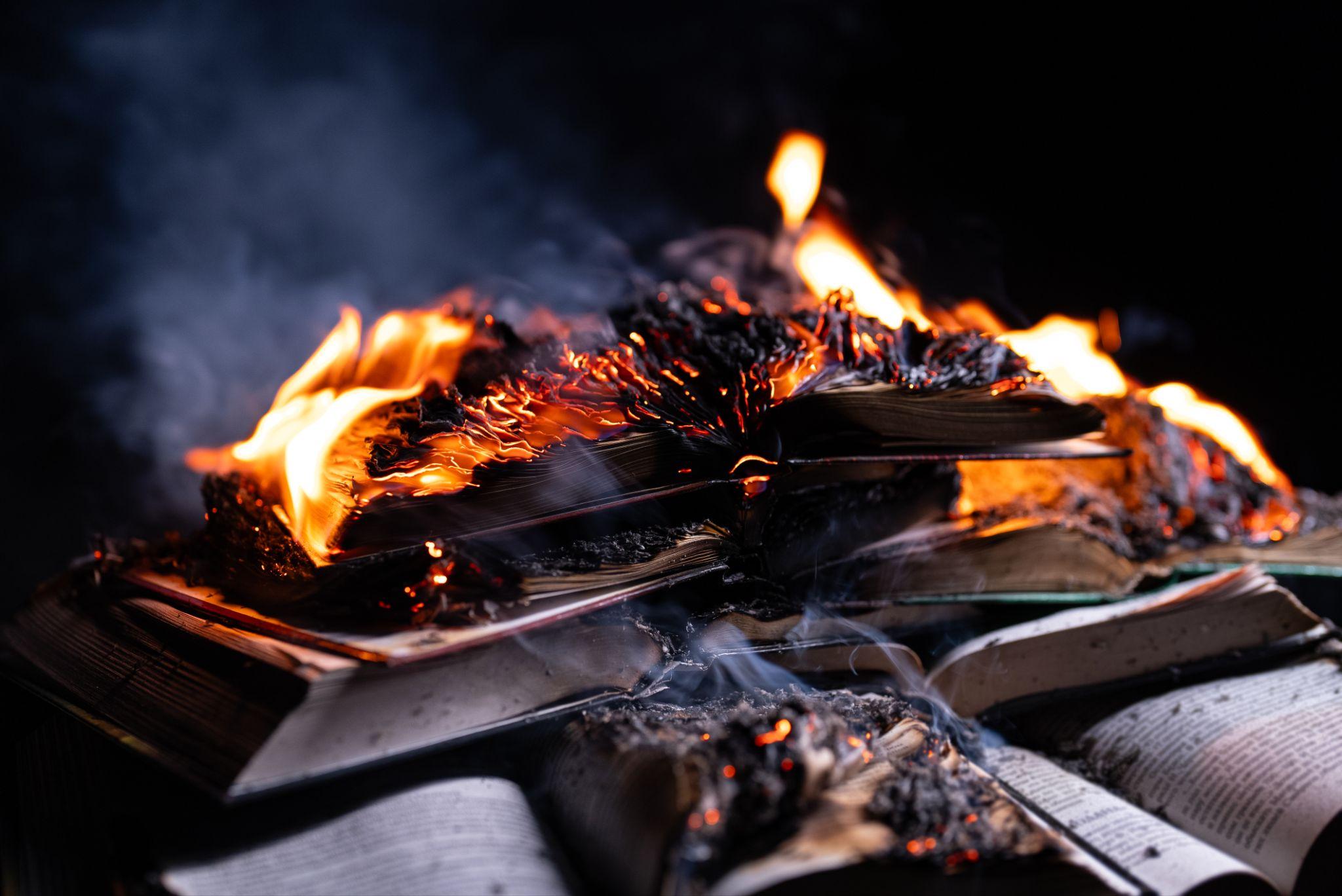
And then the townspeople do something extraordinary. They gather up their magic books — the ones they have relied on for years — and carry them to the main square. One of them explains it plainly: they used to think these books held power, but now they know they were darkness, and that Jesus is the Great Light. Light shines in the darkness, he says, and the darkness has not overcome it.
So they build a pile and set it on fire. As the flames rise, someone looks around and notices that the city, which was dark a moment ago, is suddenly full of light.
The story then does something quietly brilliant. It tells you what those books were worth: fifty thousand pieces of silver — more money than most people could earn in a lifetime. This was not junk they were throwing out. It was their savings.
The book closes with Paul looking over everything that has happened in Ephesus and deciding he is finished there. Damascus, Athens, Corinth, Ephesus — all of them have seen a great light. Now, he says, he must see Rome.
What your child learns without being taught
It reframes giving something up. Most of what children hear about sacrifice comes wrapped in loss. Here, an entire city gives up something enormously valuable and the immediate result is more light, not less. That is a picture a five-year-old can hold onto later, when you are the one asking them to hand something over.
It puts a number on the cost. Small children have almost no sense of what money is worth, so the book tells them: more than most people earn in a whole life. That single detail turns a nice moral into something with weight. The Ephesians were not giving up something they had stopped caring about. They were giving up a fortune.
Courage gets modeled twice. Paul is bold enough to walk into a room and argue for what he believes. But the two disciples he meets are brave in a different, more copyable way — they cheer for someone else’s courage. For a shy child who will never be the loudest voice, that is a genuinely encouraging thing to see honored on the page.
Light and darkness stay concrete. These are abstract words that children hear constantly in church and rarely picture. In this story, the darkness is a stack of books and the light is an actual fire in an actual square. Your child does not have to decode a metaphor — they can simply see it.
It shows what one persistent person accomplishes. Paul does not transform Ephesus in an afternoon. He stays for months and years, doing the same work over and over. In a world where children mostly encounter instant results, that is worth showing them.
Talking about it afterward
Some questions that work well with children aged four to nine:
- Why did the people in the city decide they did not want their books anymore?
- Those books were worth a lot of money. Was it hard for them to burn them? Why did they do it anyway?
- Paul’s friends told him he was courageous. When have you had to be brave?
- Is there anything in our house that is not good for our family?
That last question is worth asking with real openness. If your child names something, resist the urge to instantly agree or defend — and be ready for them to name your phone. Children who are invited into that conversation instead of ruled by it tend to let go far more willingly.
Get the book
Big City Light is available now on Amazon, along with the rest of the Abba Kid Publishing collection. If you are raising children in a world that hands them more than they can healthily hold, this is a good story to have on the shelf.
Because one day you will ask your child to give something up. It helps enormously if they have already met a city that did it gladly.