Share this Article


The bedtime story is over. Teeth are brushed. You’ve found the missing stuffed animal and tucked everyone in.
You make it to the kitchen.
Footsteps.
“I need water.”
Back to bed.
A few minutes later, more footsteps. This time it’s the bathroom. Then a question that apparently cannot wait until morning. Then the blanket feels funny.
Somehow, bedtime has become the longest part of the day.
If you’ve ever typed “why won’t my toddler go to sleep” into your phone at 9:14 p.m., probably with one eye on the hallway, you’re in familiar territory. Bedtime can wear down even a very patient parent. By the fourth trip out of the bedroom, it’s hard not to wonder whether you’re doing something wrong.
Probably not. Toddlers just have their reasons.
Why Kids Keep Getting Out of Bed
Going to bed means stopping.
That’s a hard sell when you’re three.
The toys are still there. Mom or Dad is still awake. Maybe there are voices downstairs. Why lie alone in a dark room when everyone else seems to be doing something more interesting?
And then there’s the discovery every toddler eventually makes: getting out of bed brings a parent back.
One request for water means another visit. One worried little “Mom?” might mean another cuddle. Suddenly, you have a very good reason to keep trying.
Sometimes, though, a child simply isn’t tired yet.
If you’re wondering how many hours of sleep do kids need, the American Academy of Sleep Medicine recommends 11–14 hours in a 24-hour period for children ages 1–2, including naps. For ages 3–5, the recommendation is 10–13 hours.
That sounds straightforward until a two-hour afternoon nap enters the picture.
If bedtime has suddenly become impossible, look at when your child actually slept that day. A toddler who woke from a nap at 4:30 may genuinely struggle to fall asleep at 7:30.
Before changing everything about bedtime, check the clock.
Creating a Calm and Consistent Bedtime Routine
A bedtime routine for toddlers does not need to be impressive.
Actually, simpler is often easier.
Wash up. Pajamas. Story. Prayer. Kiss. Bed.
There will still be negotiations, of course.
“Two books?”
“One tonight.”
“But this one is SHORT.”
It’s amazing how quickly toddlers become skilled negotiators once they’re in pajamas.
The useful part of a routine is that everyone knows where it ends. If bedtime sometimes includes one book and sometimes five, a child will naturally try for five every night. If the pattern stays mostly the same, there’s less room for bargaining.
This is also a lovely place for bedtime stories for kids that leave something comforting behind. A short Bible story works particularly well because it can lead naturally into prayer without turning bedtime into another lesson.
You don’t need a theological discussion at 8 p.m. Read together. Ask one small question if your child is interested. Maybe, “What do you think David felt right there?” Then pray and close the book.
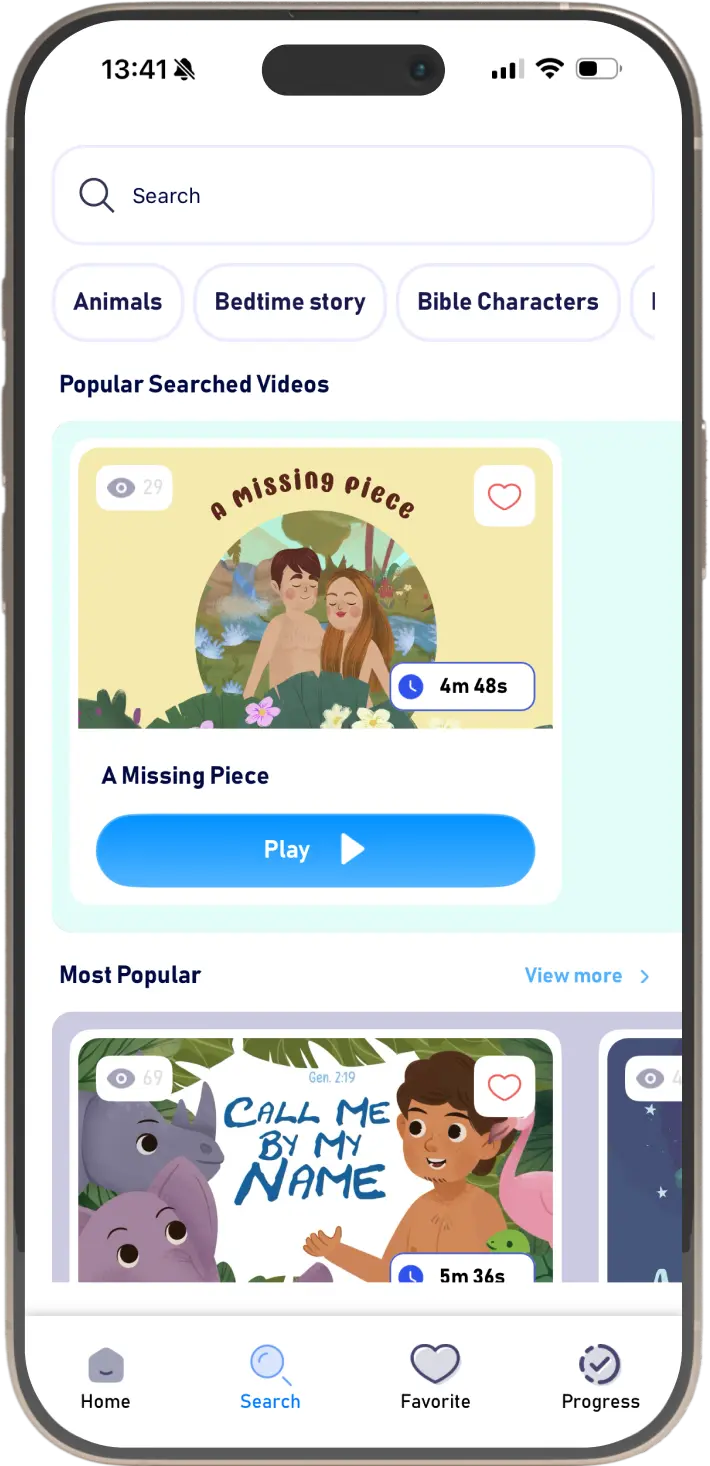
AbbaKid stories can become part of that rhythm too. Not as another activity to squeeze in before bed, but as the story that signals: the day is winding down now.
Setting Bedtime Boundaries Without Power Struggles
This part is harder than it sounds.
By the third appearance in the hallway, most parents aren’t thinking about parenting philosophy. They’re thinking, Please. Just. Stay. In. Bed.
And that exhaustion can lead in two directions: giving in to everything or getting much angrier than the situation really deserves.
Neither feels particularly good afterward.
If you’re trying to figure out how to get toddler to stay in bed, long explanations usually don’t help much. Keep the response boring and predictable.
“You already had water. Back to bed, sweetheart.”
“I know you want another book. Books are finished for tonight.”
“You can tell me about it in the morning.”
Then walk them back.
Again.
Possibly again.
There may be tears. There may also be that awful little moment after closing the door when you wonder if you were too firm.
A boundary can still be loving. “I love you. You’re safe. It’s sleeping time now” says everything a child needs without reopening the negotiation.
That consistency is especially useful during toddler bedtime battles. If getting out of bed occasionally earns another snack, another story, or ten minutes on the couch, there is a reason to keep testing tonight.
Still, nobody handles this perfectly every evening. Sometimes you give the extra cuddle because your child really seems to need it. Sometimes you lose your patience. Sometimes everyone is overtired, and bedtime is simply a mess.
Tomorrow is another bedtime.
Helping Your Child Feel Safe Enough to Stay in Bed
There’s a difference between “I don’t want to sleep” and “I don’t want to be alone.”
That difference matters.
Bedtime is quiet, and quiet has a funny way of making small worries feel enormous. The shadow beside the dresser suddenly looks suspicious. A bad dream comes back. A noise outside needs investigating immediately.
Telling a scared child, “There’s nothing there,” may be true, but it doesn’t always help.
Try naming what is happening instead.
“That shadow looks scary to you.”
Or: “You’re worried about having that dream again.”
Then give the child something solid to hold onto.
Psalm 4:8 says, “In peace I will lie down and sleep.” You can whisper that together while tucking in the blanket. No sermon needed. A child can understand the simple truth underneath it: God stays with me when Mom or Dad leaves the room.
A favorite AbbaKid Bible story can help create that same feeling before lights-out. Read or listen together, then connect the story to one tiny bedtime thought: “God was with them, and He is here with you too.”
Some nights, that will be enough.
Other nights, you’ll be back in the hallway five minutes later.
That doesn’t mean bedtime is broken.
Keep the routine familiar. Keep the boundary clear. Make room for genuine fear when it appears. And remember that this stage won’t last forever, even though 9:14 p.m. on a Tuesday can certainly make it feel that way.
If your child enjoys ending the day with a Bible story, you can also try an AbbaKid story in the app or read one of the AbbaKid books together. Nothing complicated. Just a quiet story, a short prayer, and hopefully, eventually, a sleeping child.